This is bear (and wildlife) country. There are active bears in the area.
Information about bear and wildlife safety can be found at www.wildsafebc.com
The RAPP hotline should be used to report wildlife-human interactions where public safety may be at risk: 1-877-952-7277
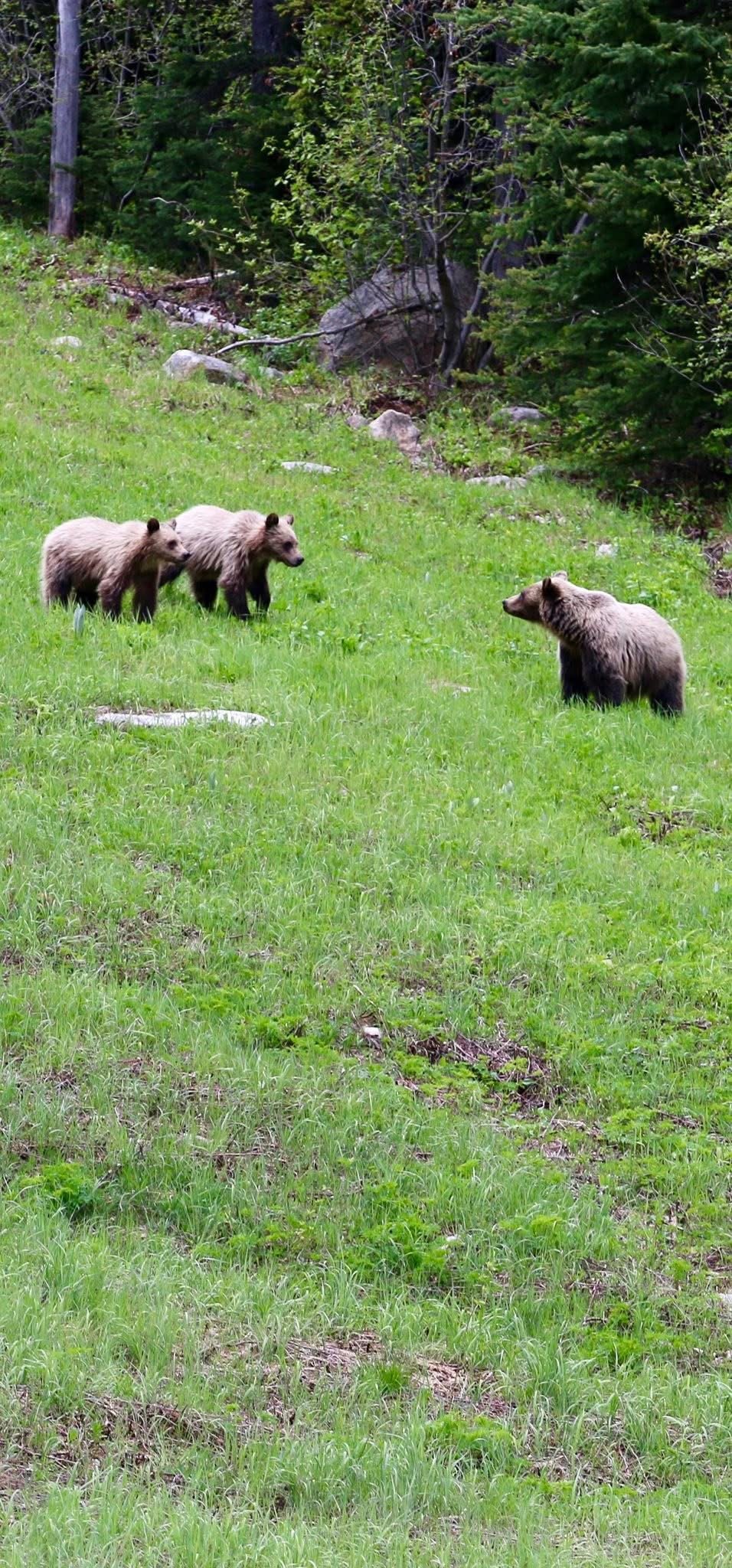
Bear activity continues throughout Big White, including confirmed sightings of a sow with two cubs. Please be aware that we DO NOT have an accurate inventory of the bears. Just because a bear was spotted in one location does not mean that there are not bears in other locations throughout the populated community.
WE WANT TO SHARE INFORMATION ABOUT THE BEAR’S LOCATION (WITHOUT ENCOURAGING PEOPLE TO COME TO BIG WHITE TO SEE THEM)
For safety purposes, it is extremely valuable to share information about bear sightings with the community.
When posting on social media, we encourage people to share the bear’s location (without photos) on the Big White Mountain Community News Facebook page: https://www.facebook.com/share/g/19Hy12htFq/
We understand that people want to share photos of these majestic animals. However, we ask that you post those on your personal Facebook page rather than on community group pages. We want to avoid attracting sightseers to Big White to look for bears.
It is safer for both people and bears if bears remain wary of humans. When bears lose their natural fear, they can become a significant public safety risk, which often leads to them being destroyed by conservation officers.
Our priority is keeping people safe while continuing to coexist responsibly with wildlife.
WE ARE INCREASING THE SAFETY IN HIGH PRIORITY AREAS
We have identified 5 priority community areas for initial next steps.. Those areas are the school, ski patrol hut, disk golf course, village trail to Snowpines, and trail to Black Forest. These areas were identified as a priority due to their high recreational use by the community including the kids summer camp.
Bear resistant dumpsters are currently being swapped with regular dumpsters in these areas. We are working with the RDKB to get signage at the transfer station and at the School warning of active bears in the area. The greenhouse and community garden with remain closed this season as these can act as an atractant for bears and other wildlife. Other safety measures such as fencing and cameras, specifically near the school which also serves as our community park, are being explored.
NEVER FEED THE BEARS AND KEEP YOUR GARBAGE SECURELY STORED
We do not want to attract bears into populated areas, in the interest of keeping both people and bears safe. You can help by minimizing bear attractants, particularly food and garbage.
Once a bear accesses an unnatural food source—especially high-calorie items commonly found in trash —it will continue to aggressively seek out those sources.
Each year in British Columbia, hundreds of bears are destroyed as a result of conflicts with people. Most of these conflicts begin when bears gain access to non-natural food sources such as garbage.
Thank you for doing your part to keep people and the bears safe!
FAQs
How Many Bears are in the Area?
1
We know there is at least 1 sow (mama Grizzly) and her 2 cubs in the area. However, we may not be dealing with just 1 sow and her cubs as a sow and her cubs have been observed in 2 different areas simultaneously on at least 1 occasion by community members (however it is hard to verify that without video evidence or an accurate inventory of the bears). Also, the cubs have been reported as different sizes, but again, this is based on subjective observation so not verified. There has however, been multiple sightings of at least 1 male in the area but he (or they) seem to keep to the perimeter of the populated area versus within it like the sow(s) and cubs. Moral of the story - just because a grizzly (s) have been reported in 1 area, does not mean there aren’t others in other areas. Always practice bear safety.
Will the sow(s) and her cubs leave the area when the cubs are grown?
2
The experience we are having now with the increased grizzly presence in the populated big white area is not situational to a sow and her 2 cubs trying to avoid male grizzlies until her cubs are of age to become independent. At first, this was the belief; the sow and her cubs would stay in the area for approximately 2 years and then move on. We now understand that this is not the case, these bears are here to stay (or at least the female(s) is).
The bear presence in the last couple years feels different than in previous years. Why?
3
Long term residents say that Big White has not experienced a grizzly bear(s) living in the populated area before. Previously, they migrated through the area. You would see them, but they never stayed. This also underscored our belief that this was situational and a 1 off. However, our understanding now is that the moratorium of hunting grizzlies has caused a significant increase in the grizzly population and this is why we are now seeing grizzlies moving into the populated area. The increased grizzly population needs to expand their territory.
Can the bears be relocated?
4
Although there are many pilot projects being used to move bears out of areas including the use of drones, dogs and other technologies, the results are inconclusive on whether they work as a permanent solution (some experts claiming success and others still skeptical). Because of this we have not found support from local authorities to try and relocate them.
Information about bear and wildlife safety can be found at www.wildsafebc.com
The RAPP hotline should be used to report wildlife-human interactions where public safety may be at risk:
1-877-952-7277